Natural Goat Dewormers: 5 That Hold Up on a Fecal, and 5 That Don’t!
Natural Goat Dewormers – Hype or science?
We all want to do what is best for our goats, and one of the biggest issues facing goat owners are parasites. With the increase in parasite resistance to commercial dewormers, many goat owners are turning to what they consider natural parasite control methods. A well-rounded parasite management plan always starts with managing the goat’s environment, eating habits, and nutrition. Adding natural herbs and minerals that reduce parasites is a valuable step in parasite management practices.
Keeping goats on a budget means spending money on what works to keep my herd healthy, and what works. This means researching what works and what is over hyped on social media by influencers. I want to know what actually holds up to science and goat anatomy, not what an influencer swear works with no research to back the claims.
I asked a goat group on social media what they use besides the bottle on the shelf to keep their herd parasite free. I knew some of the standard answers I would get, few surprises. Then I went down the rabbit hole researching the science behind the recommendations. It was a long list, but I have narrowed it down for you. Apple cider vinegar. Diatomaceous earth. Garlic. Pumpkin seeds. Oregano oil. Two popular herbal blends I see every week. Copper boluses. And lye, which is new, loud, and a bad idea. Some of those answers have a paper trail. Most of them have a story and a good YouTube video. Which ones pass the test on a fecal, and which ones only work because the rest of the parasite management plan is doing the heavy lifting.
This is the sort I wish I had the first year I owned goats. A petri dish is not a doe. A sheep trial is not a goat trial. And a shiny coat in October is not a fecal egg count. A chicken doesn’t have a rumen. If you are new, you do not need a chemistry degree. You need to know which claims survive the rumen, and which ones only survive Facebook.
Why the dish says yes and the goat says no
A lab test puts a worm or an egg in a small bath of extract. The bath is strong. The worm cannot leave. Hours later the egg does not hatch. That is a real result, and the easiest one to overread. This is why reading how a clinical trial is completed vs. the abstract matters. A goat is a fermentation tank and the rumen holds liters of fluid and microbes whose job is to take plant chemicals apart. Garlic’s allicin is fragile. Clove oil and oregano oil are volatile. They smell like medicine in the bottle and arrive at the abomasum as a rumor. Wormwood and black walnut are in the same boat. The dose that killed a larva in the dish is not the dose that reaches an adult barber pole latched under mucus, drinking blood.
Molecule size is part of it, but it is not the whole story. A tiny oil molecule can cross a membrane in a dish and still never survive fermentation in the rumen. A big tannin molecule is harder for rumen microbes to wipe out on the first pass, which is why sericea lespedeza shows up on a fecal and a garlic drench does not. Copper oxide wire particles skip the plant problem entirely. They are metal wires that sit in the abomasum, where adult barber pole lives. Delivery is the difference. Not the label that says natural.
Contact time matters too. In the dish the worm soaks for hours. In the goat, fluid moves. Killing an egg in a culture does not mean you killed the adults already bleeding the doe. Sericea mostly cuts egg-laying. Copper wire can kill adult barber pole. Those are different jobs. A dish rarely tells you which one you bought.
Why a sheep trial is not a goat dose
Goats clear a lot of commercial dewormers faster than sheep. Liver enzymes run hotter for benzimidazoles, levamisole, and the ivermectin family. That is why a sheep label dose often fails in a goat, and why veterinarians usually figure about one and a half to two times the sheep dose, by weight, for those drugs. Underdosing is also how resistance gets trained. Simply because sheep and goats are about the same size small ruminants does not mean they have the same biology.
That math does not transfer to a jar of herbs either, you can’t simply double the dose. Almost none of these plants have a goat-versus-sheep blood level, a half-life, or a dose worked out against a fecal. The best oregano oil paper was in sheep, at 150 milligrams of oil per kilogram, and it still only cut egg counts about 60 percent. Nobody has shown that doubling that in a goat gets you to a clearance. Faster liver metabolism only matters if the chemical is absorbed and then has to reach the worm through the blood. A lot of these plant compounds die in the rumen first, because the rumen is designed to break down plant matter. That includes herbs. Not enough of the active compounds in the plant survive the fermentation process in the rumen to clear the liver and be ingested by the parasites via blood. Between the rumen, and chewing cud, not enough of those compounds survive the digestive process to impact the parasites directly in the digestive tract.
The other direction is the dangerous one. Some of these are already close to a toxic dose in sheep. Nicotine from tobacco, male fern, wormwood, and copper sit on that line. Goats are not automatically safer because they are harder to worm. Copper is the one place they tolerate more than sheep, and people still overdose it by stacking a bolus on a hot mineral. One and a half to two times a sheep herb dose is not a protocol. It is an untested poison someone without a degree in microbiology has a theory might work, with a parasite story attached. If a product only “works” at a higher dose than anyone has tested in goats, it does not work yet.
What “works” means on for a farm
A dewormer earns the name when it cuts fecal egg counts about 95 percent in a live animal, against a named parasite, compared with animals who got none of it. Barber pole is Haemonchus contortus. Coccidia are Eimeria. Liver fluke is Fasciola. Roundworms in the loose sense are the rest of the gut nematodes. I am not going to pretend five kitchen jars cleared that bar. Two tools have goat trials. Three more are the closest honest supports. Then five claims that do not match the science. Let’s dig into some long held myths, which might upset some people.
Five that hold up
1. Sericea lespedeza
This is the plant with a real body of goat work. Condensed tannins cut female barber pole fecundity, so fewer eggs hit the pasture, and they also knock coccidia oocyst counts. Shaik and colleagues fed sericea hay to does challenged with Haemonchus and watched egg shedding drop during the feeding period, then bounce back after the hay stopped. Kommuru and colleagues fed pelleted sericea to weaned bucks and saw nematode eggs fall about 79 percent and coccidia oocysts about 97 percent within seven days, versus a commercial pellet. Later pellet work from Terrill’s group found leaf meal and whole-plant pellets, at about half the diet, did the same kind of job. Adult worm counts did not always fall. So this is a pasture-contamination and coccidia tool while they are eating it, not a one-dose cure and it does nothing documented for liver fluke. The key to lespedeza working is that it has to be part of their regular diet. Not the occasional supplement. If you decide to give this a try, the easiest way is via pelleted concentrate, as hay is often hard to source in most of the country.
2. Copper oxide wire particles
This is the other one with goat numbers, and it is narrow on purpose. Copper oxide wire particles are a short hit on adult barber pole in the abomasum. Burke and colleagues found that in kids, doses from half a gram to four grams lowered egg counts versus controls for about three weeks. In South African work, two-gram and four-gram boluses cut established Haemonchus burdens 93 to 95 percent, and the effect faded by about 28 days. A communal-goat field trial saw about an 89 percent egg-count drop after a four-gram dose. It does not reliably cover other roundworms, coccidia, or flukes. Copper toxicity is the ceiling, especially if sheep share the farm, or the goats are already on a high-copper mineral, or someone repeats the bolus all summer. This is a targeted tool for a fecal or a FAMACHA that says barber pole, used with a veterinarian, not a monthly natural dewormer. I am not putting a gram chart in a blog post. The dose that helps is also the dose that can stack into a liver problem.
3. Condensed tannins, when the plant is the real delivery
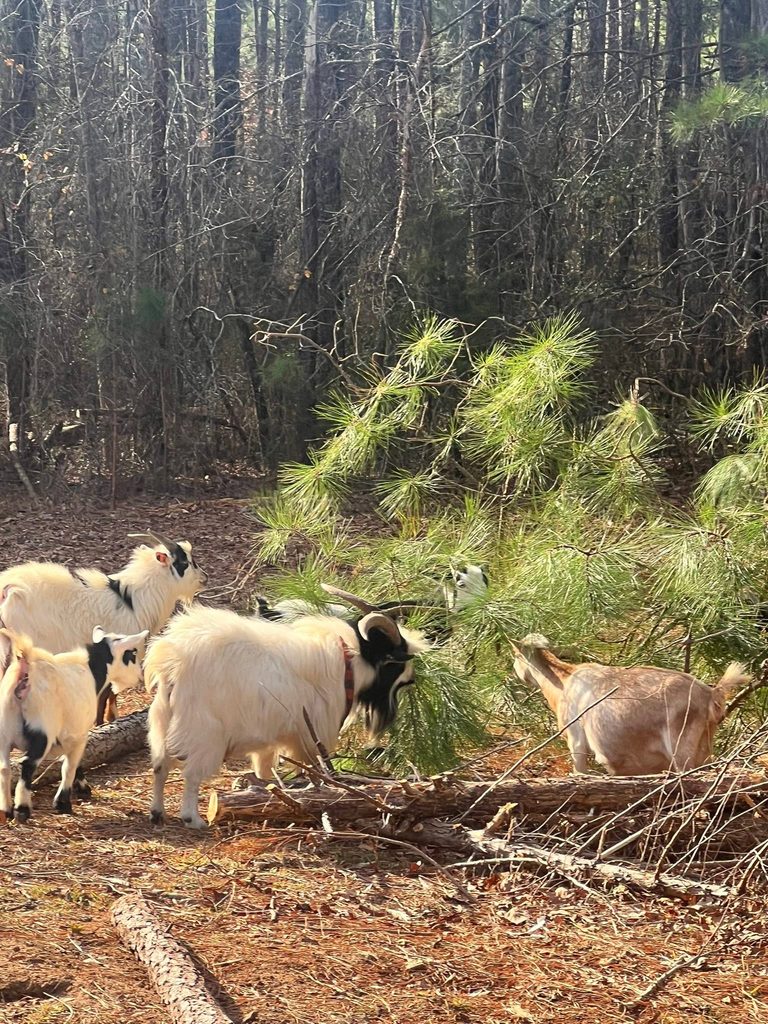
The mechanism behind sericea is not magic exclusive to one weed. Paolini and colleagues gave goats with adult Haemonchus a quebracho tannin extract at 5 percent of diet dry matter. Egg output dropped because female worms laid fewer eggs, not because the worm count hit zero. That is the same family of chemistry. Birdsfoot trefoil and sainfoin have sheep and deer work in the same lane. Pine bark, pine needles, and a bottle labeled pine tannins do not have a goat fecal trial behind them. Browse is not a dose. If you want this effect, feed the plant that was studied, as hay or pellets, for real days. Do not buy a tincture and call it the same thing.
4. Enough protein and a goat mineral, as resilience
This one does not kill worms, and I will not dress it up as if it does. A goat in good protein status handles barber pole better. She replaces the blood she loses. A proper loose goat mineral, with copper in the goat range, supports that resilience. A mineral buffet she sorts like candy does not. Trials do not show free-choice minerals clearing Haemonchus, Eimeria, or fluke. What they show, over and over, is that thin, late-pregnant, and lactating goats crash first. Feed is not a dewormer. It is the reason a moderate worm load does not become a dead kid. If your “natural program” is herbs plus a bag of cheap feed, you have the expensive half and skipped the half that matters.
5. Pasture height, rest, and not treating the whole herd
Barber pole larvae stay in the bottom few inches of grass. Grazing above that, resting paddocks, and not deworming every doe because one looks off are the controls that still move egg counts when bottles fail. FAMACHA and a fecal on the pale ones keep a refuge of susceptible worms so your real drugs last longer. It will not save a doe who is already at a white eyelid. It keeps you from making ten more of her.
The almost: oregano oil
Oregano essential oil is the best of the oil claims, and it still does not make the hold-up list but just barely. Štrbac and colleagues tested a 76 percent carvacrol oil in sheep. The dish stopped 71 to 94 percent of eggs hatching. In the sheep, 150 milligrams per kilogram cut egg counts about 60 percent by day 14. Albendazole in the same trial cut them about 95 percent. A small goat field project reported a dip, with shaky stats. Sixty percent leaves the parents of the next generation. If you are going with Oregano Essential Oil as a parasite prevention option, it can be part of a comprehensive program, but do not depend on it as your sole means for parasite management.
Five to skip – Hype not science
Yes, I can list ten people with anecdotal stories how someone has been using one of these methods for years and it works. What someone claim “works” on their farm is not a controlled study. Why this matters? Because chanced are, and what I have seen many times, is there is no proof that this one item is controlling parasites on their farm. It is usually used in conjunction with herd management practices that are contributing to the success. Let’s see what the science says.
1. Apple cider vinegar
The claim is that acid changes gut pH and worms cannot live there. The rumen already runs on acetate, holds liters of buffered fluid, and needs to stay near neutral for the goat to digest hay. A splash of vinegar cannot move that, and the worms are not living in the rumen. They are in the abomasum and intestine, which have their own pH controls. There is no goat fecal trial showing vinegar kills barber pole, other roundworms, coccidia, or flukes. A West African Dwarf study drenched vinegar and measured bloodwork, not parasites. Chicken data does not transfer, they don’t have a ruemen. If you like a little vinegar in the water because the does drink more, fine. Do not call it a dewormer, it isn’t actually making it to where the worms live.

2. Diatomaceous earth
The story is that sharp fossils cut the worms. That story dies in a wet gut. Bernard and colleagues gave diatomaceous earth to Spanish and Boer-cross goats carrying Haemonchus, Eimeria, and Trichostrongylus. Over six weeks egg counts went up and packed cell volume went down. No anthelmintic effect. A Prairie View pasture trial in pregnant and lactating goats found no difference in egg counts or hematocrit. Food-grade dust is also a lung irritant if they inhale it and can actually contribute to respiratory issues. The barn jar can stay for garden bugs. It does not belong in the dewormer kit.
3. Garlic and pumpkin seeds
Garlic has the best press and the weakest goat trial. Burke and colleagues gave kids commercial garlic juice, fresh juice, or bulbs. By day 14, packed cell volume and egg counts were no better than water, and kids still needed rescue deworming. Pumpkin seeds get invited along because cucurbitin is an old tapeworm story. Strickland and colleagues saw about a 64 percent egg drop on garlic and 65 percent on pumpkin kernel in six Merino lambs per group, and the counts rebounded off treatment. A SARE goat-kid project found no significant drop from ground seed, drench, or oil. Below 95 percent, temporary, and not repeated in goats. That is a snack, not a treatment. Do egg counts drop? Yes, but not enough to be considered effective and rebound as soon as you stop. No coccidia or fluke claim holds.
4. Herbal blends: Molly’s and Land of Havilah
Molly’s Formula 1 is black walnut hull, garlic, fennel, and wormwood. Fennel is a gut soother. Garlic failed the goat test. Wormwood and black walnut have dish activity and old tapeworm folklore, not a controlled goat fecal. Land of Havilah adds clove, cayenne, cinnamon, ginger, turmeric, thyme, hyssop, chaparral, pau d’arco, yarrow, lobelia, mullein, bitter orange, and male fern. Clove oil and male fern can hurt Haemonchus eggs and larvae in a dish. Male fern’s old drug use was tapeworm, with a toxicity record that includes tremor, vision loss, and heart failure. The shop claims barber pole, coccidia, fluke, lungworm, and meningeal worm. There is no peer-reviewed fecal trial on the formula.
People are not lying when the herd looked better. They started the herbs the same week they rotated or fed better. Barber pole is seasonal. A pale July doe who is pink in October often would have been pink anyway if she was resistant. The ones who died are not in the thread. Burke, Wells, Casey, and Kaplan tested a commercial blend from this pantry — wormwood, garlic, black walnut, fennel, hyssop, thyme — in dairy goats for 112 days. The herbal group was more anemic than untreated goats. No fecal benefit. The paper does not name Molly’s. Believe the calendar. Count the eggs.
5. Lye
This one is new because a video said so and I am definitely seeing an increase in goat forums recommending Lye. Sodium hydroxide has no published live-goat trial as a dewormer. A 1918 Department of Agriculture hog test found no worm-load reduction. The lab papers people cite killed eggs in a dish or in feces meant for fertilizer, at a pH around 13. That is corrosive, not a drench. The concentration that could touch a worm is the concentration that burns the esophagus and rumen and knocks the microbes off their job. Yes, it can damage the lining of the goat’s rumen. Kentucky’s small-ruminant veterinarian and parasite researchers have said the same thing in public. Do not put lye in feed. Do not put it in water. A doe with a white eyelid needs a fecal and a drug that still works on your farm, not a caustic. “Low dose” that influencers claim isn’t caustic can still cause gastric ulcers.
What to do with a pale eyelid instead
If the eyelid is white or the doe is down, this is not an herb week. Call a veterinarian, run a fecal, and use a drug class you have not burned out, at a goat dose, on the individual who needs it. Leave the healthy ones untreated. If barber pole is the finding and copper status is known, a wire-particle bolus is a vet conversation, not a Facebook dose. Sericea hay or pellets can be a stretch of the diet through the high-risk months. Rest the short grass. Cull the doe who is anemic every summer. She is seeding the pasture.
Liver fluke is a separate problem. Nothing on the skip list replaces a flukicide where those drugs still work. Fluke needs wet ground and snails. Herbs do not break that life cycle.
If you want the barn version
The fecal, the eyelid chart, and the “do this before you buy a jar” list live in the Shoestring Farm Girl goat parasite bundle. It is the printable I use so the plan is on the wall, not in a group thread at 10 p.m. Soft sell, hard reason: the does do not care what the comments section believes. As always, consult your veterinarian and discuss this information with them if you have specific health questions about your herd.
Remember to sign up for my monthly newsletter and geta free PDF of the Goat Food Pyramid.
Carrie Lynn – Shoestring Farm Girl.

References
Bernard, G., Worku, M., & Ahmedna, M. (2009). The effects of diatomaceous earth on parasite infected goats. Bulletin of the Georgian National Academy of Sciences, 3(1), 141–146.
Burke, J. M., Morrical, D., & Miller, J. E. (2007). Use of copper oxide wire particles to control gastrointestinal nematodes in goats. Journal of Animal Science, 85(10), 2753–2761. https://doi.org/10.2527/jas.2006-784
Burke, J. M., Wells, A., Casey, P., & Kaplan, R. M. (2009). Herbal dewormer fails to control gastrointestinal nematodes in goats. Veterinary Parasitology, 160(1–2), 168–170. https://doi.org/10.1016/j.vetpar.2008.10.080
Burke, J. M., Wells, A., Casey, P., & Miller, J. E. (2009). Garlic and papaya lack control over gastrointestinal nematodes in goats and lambs. Veterinary Parasitology, 159(2), 171–174. https://doi.org/10.1016/j.vetpar.2008.10.021
Hale, M., Coffey, L., & Burke, J. (2026). Copper oxide wire particles. Sustainable Agriculture Research and Education. https://www.sare.org/publications/sustainable-control-of-internalparasites-in-small-ruminant-production/copper-oxide-wire-particles/
Johnson, B. (2025, November 7). Should I use lye to deworm my sheep & goats?? No!!!!!!! Kentucky Sheep and Goat Development Office. https://www.kysheepandgoat.org/post/should-i-use-lye-to-deworm-my-sheep-goats-no
Kommuru, D. S., Barker, T., Desai, S., Burke, J. M., Ramsay, A., Mueller-Harvey, I., Miller, J. E., Mosjidis, J. A., Kamisetti, N., & Terrill, T. H. (2014). Use of pelleted sericea lespedeza (Lespedeza cuneata) for natural control of coccidia and gastrointestinal nematodes in weaned goats. Veterinary Parasitology, 204(3–4), 191–198. https://doi.org/10.1016/j.vetpar.2014.05.014
Paolini, V., Bergeaud, J. P., Grisez, C., Prevot, F., Dorchies, P., & Hoste, H. (2003). Effects of condensed tannins on goats experimentally infected with Haemonchus contortus. Veterinary Parasitology, 113(3–4), 253–261. https://doi.org/10.1016/S0304-4017(03)00064-5
Shaik, S. A., Terrill, T. H., Miller, J. E., Kouakou, B., Kannan, G., Kallu, R. K., & Mosjidis, J. A. (2004). Effects of feeding sericea lespedeza hay to goats infected with Haemonchus contortus. South African Journal of Animal Science, 34(5), 248–250.
Strickland, V. J., Krebs, G. L., & Potts, W. (2009). Pumpkin kernel and garlic as alternative treatments for the control of Haemonchus contortus in sheep. Animal Production Science, 49(2), 139–144.
Sustainable Agriculture Research and Education. (n.d.). Final report for LNE08-269. https://projects.sare.org/project-reports/lne08-269/
Štrbac, F., Bosco, A., Maurelli, M. P., Ratajac, R., Stojanović, D., Simin, N., Orčić, D., Pušić, I., Krnjajić, S., Sotiraki, S., Saralli, G., Cringoli, G., & Rinaldi, L. (2023). A potential anthelmintic phytopharmacological source of Origanum vulgare (L.) essential oil against gastrointestinal nematodes of sheep. Animals, 13(1), 45. https://doi.org/10.3390/ani13010045
Vatta, A. F., Waller, P. J., Githiori, J. B., & Medley, G. F. (2009). The potential to control Haemonchus contortus in indigenous South African goats with copper oxide wire particles. Veterinary Parasitology, 162(3–4), 306–313. https://doi.org/10.1016/j.vetpar.2009.03.005
Vatta, A. F., Waller, P. J., Githiori, J. B., & Medley, G. F. (2012). Persistence of the efficacy of copper oxide wire particles against Haemonchus contortus in grazing South African goats. Veterinary Parasitology, 190(1–2), 159–166.
-
Goat Hay for Winter on a Budget: Best Types, Quality Secrets, Storage & Waste Tips That Actually Save Money
Cold weather is coming, and now is the time to buy hay for the winter.…
-
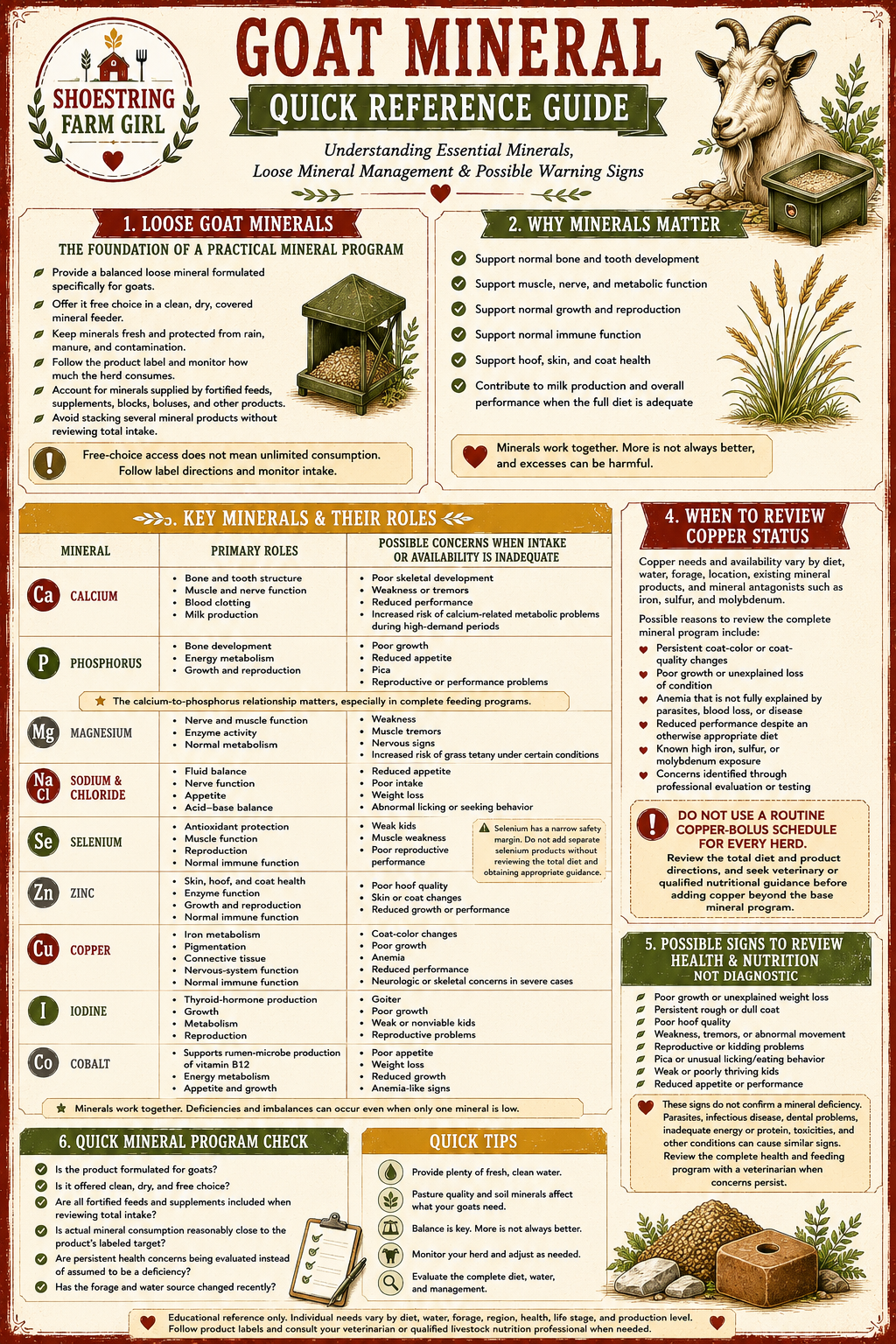
10 Minerals Your Goats Might Be Short On
10 Minerals Your Goats Are Short On and How to Supplement Without Breaking the Budget!…
-
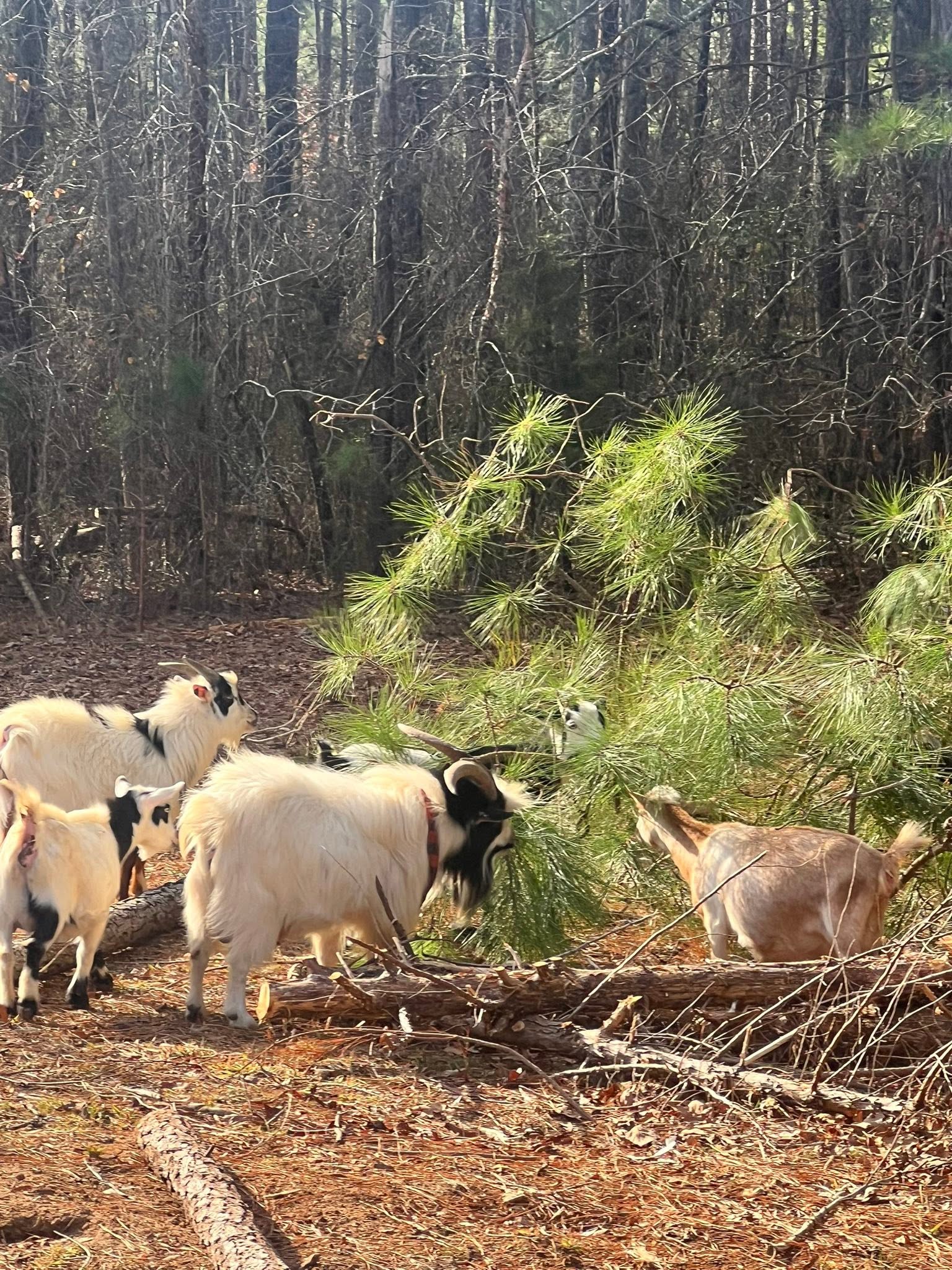
Natural Goat Dewormers: 5 That Hold Up on a Fecal, and 5 That Don’t!
Most “natural” goat dewormers die in the rumen. Here is what fecal trails and science…
