Copper, Iron, and the Anemic Goat
Why copper is important and iron isn’t going to fix an anemic goat.
If you keep goats long enough, you will stare at a rusty black doe and a split tail tip and hear the same two words from every forum and social media community: copper deficiency. Those words are not empty, but they are not the complete story. Many of these “signs” came from generations of farmers who observed their livestock and corrected problems naturally, well before blood and fecal testing came on the scene.
Copper really is one of the minerals goats struggle to hold onto, and the coat really does tell on them. High iron concentrations in well water in a significant area of the U.S. can contribute to goats not being able to effectively utilize the copper they do get in their diet. But the coat is not a blood test, a fish tail is not a diagnosis by itself, and the pale goat in the chute is not always an iron problem. Sometimes iron is part of why copper failed in the first place.
This post walks through what copper actually does, the signs keepers use in the barn, what else can look the same. Plus the parasite, iron, and copper tangle, and why pouring iron into a copper-deficient goat usually does not rebuild red blood cells.
What copper is doing in a goat
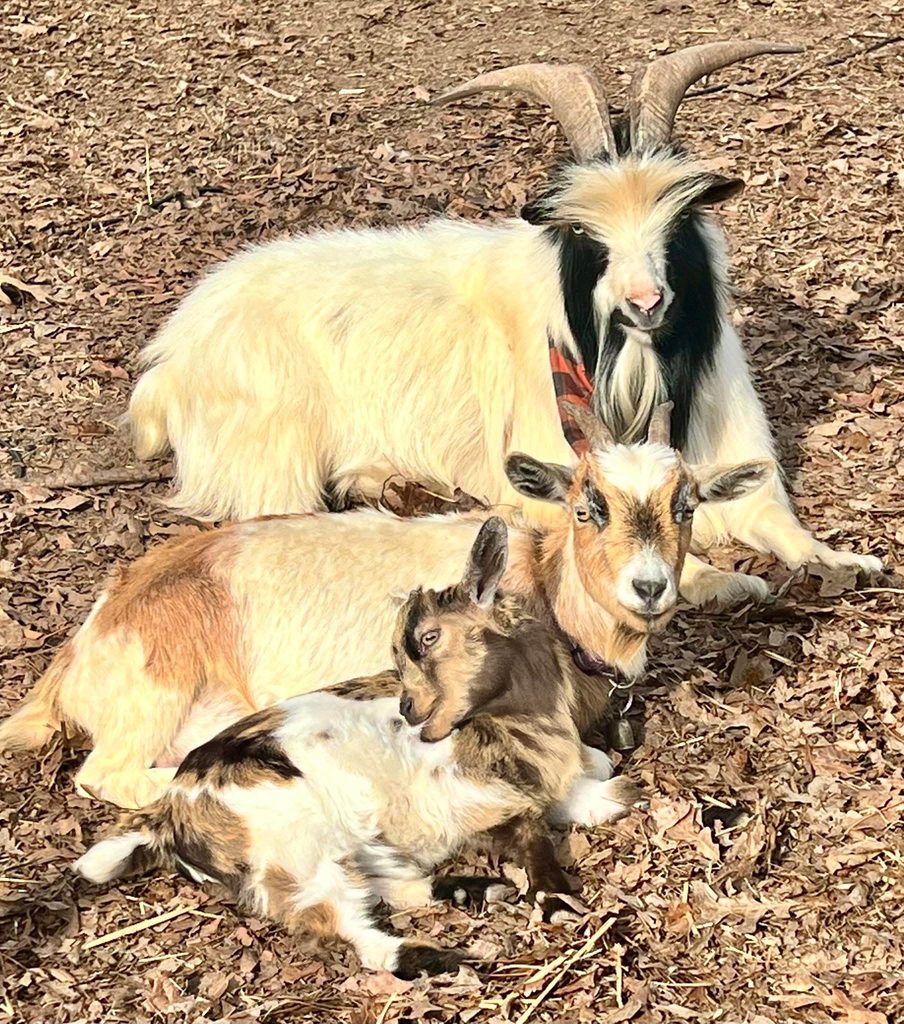
Copper is not a “nice extra.” It is a cofactor in enzymes that run pigment, connective tissue, antioxidant defense, nerve insulation, energy production, and iron traffic. The enzymes most relevant to what you see on a live goat are tyrosinase (melanin and coat color), lysyl oxidase (collagen and bone), cytochrome c oxidase (cellular energy), superoxide dismutase (oxidative stress), and ceruloplasmin, the copper protein that oxidizes iron so it can ride transferrin into new red cells (Pugh, 2023; Suttle, 2010). So these old farmers were onto something with noticing coat and hair changes generations before the science backed them up!
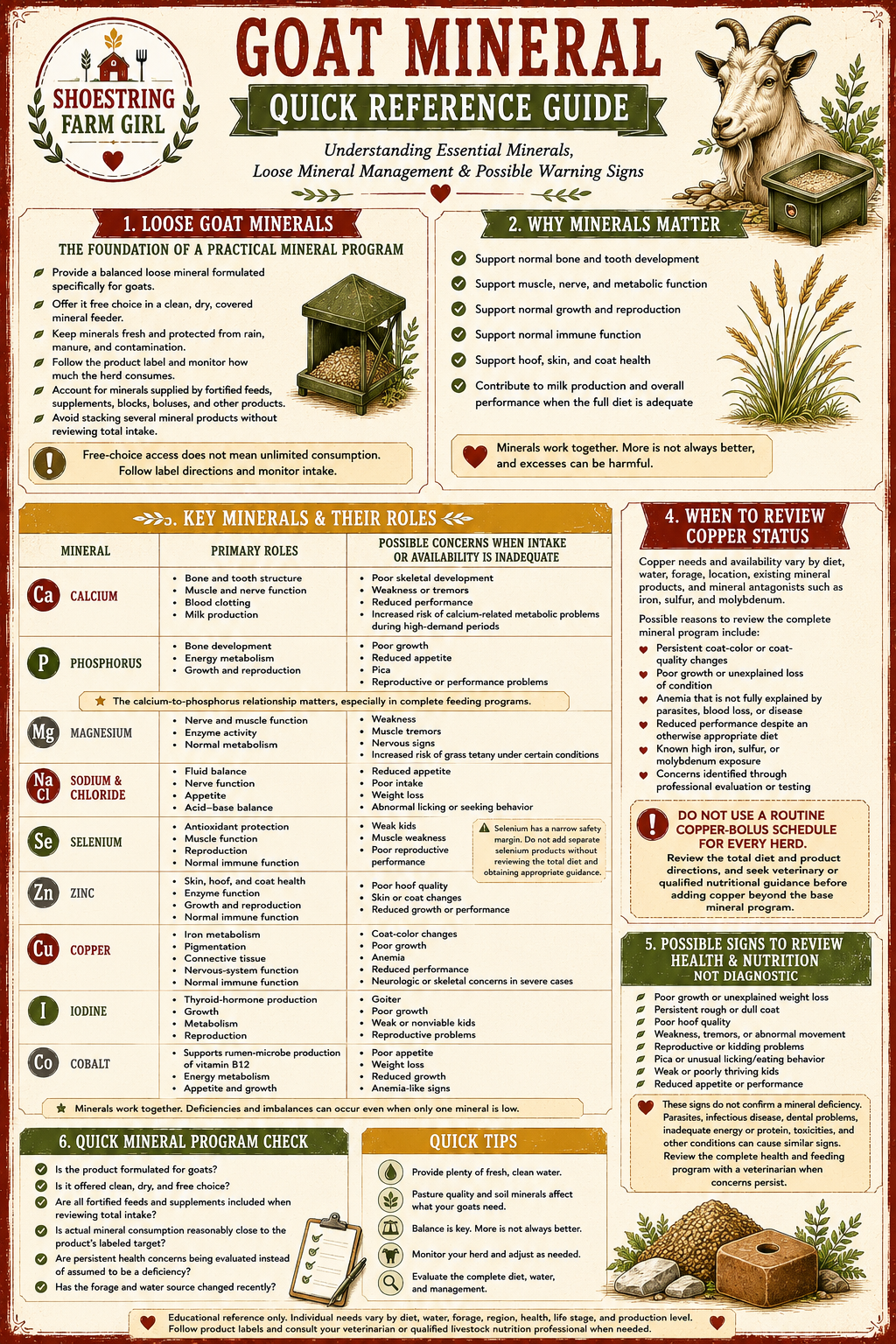
Goats need more dietary copper than sheep, so getting minerals and supplements specific for goats is important. The National Research Council places typical goat requirements around 15–25 mg copper per kilogram of diet dry matter, compared with roughly 5–8 mg/kg for sheep (National Research Council, 2007; Merck Veterinary Manual, 2025). That gap is why sheep and multi-species minerals on a goat farm are a slow wreck. The number on the feed tag is also not the whole story. Molybdenum, sulfur, and iron in forage or well water bind copper in the rumen as thiomolybdates or compete at the gut wall, so a ration that “has copper” on paper can still leave goats empty (Merck Veterinary Manual, 2025). A copper-to-molybdenum ratio of about 6:1 to 10:1 is commonly recommended (Merck Veterinary Manual, 2025).
Why are goats not getting enough copper?
It’s because of how we keep goats, humans are the cause despite our good intentions. Goat species in the wild would get appropriate levels of iron from their diet. They consume a wide variety of plants over a large range area. No matter how hard we try, a pen or pasture can’t mimic that. Even rotational grazing has it’s limitations.
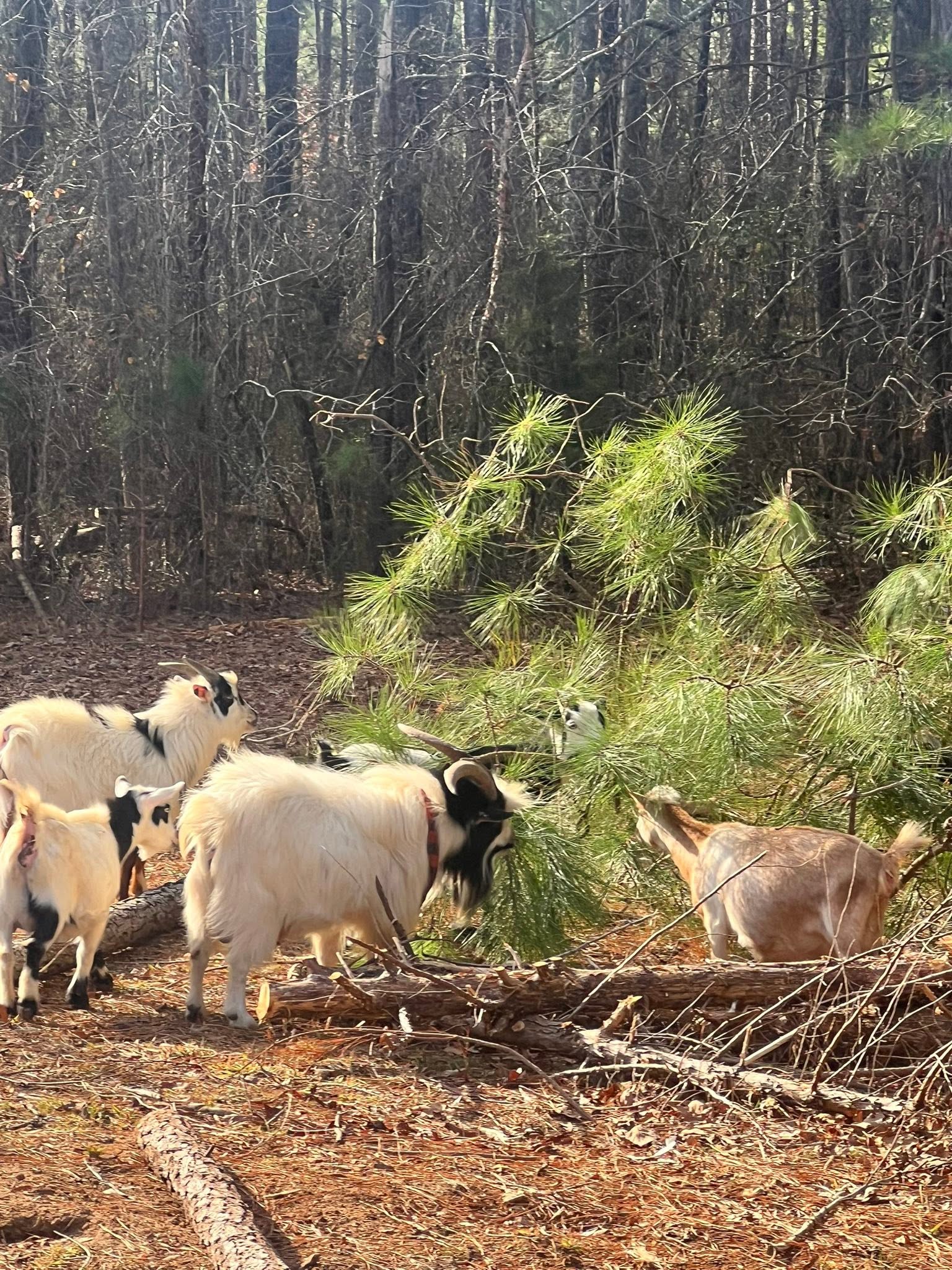
Browse over grass: Wild goats don’t spend a lot of time grazing on lush grass pastures. No, they much prefer trees, shrubs, vines, bark, and weeds. This food preference has it’s benefits, these food sources have deeper root systems than grasses, meaning they pull more nutrients and minerals into the plant from deeper in the soil. A goat eating an all you can eat buffet of 20 deep rooted plants, get a natural mineral buffet through the food they are consuming. Relying on a few species of shallow rooted grasses as the base of their diet does not provide them with the appropriate level of vitamins and minerals to stay healthy.
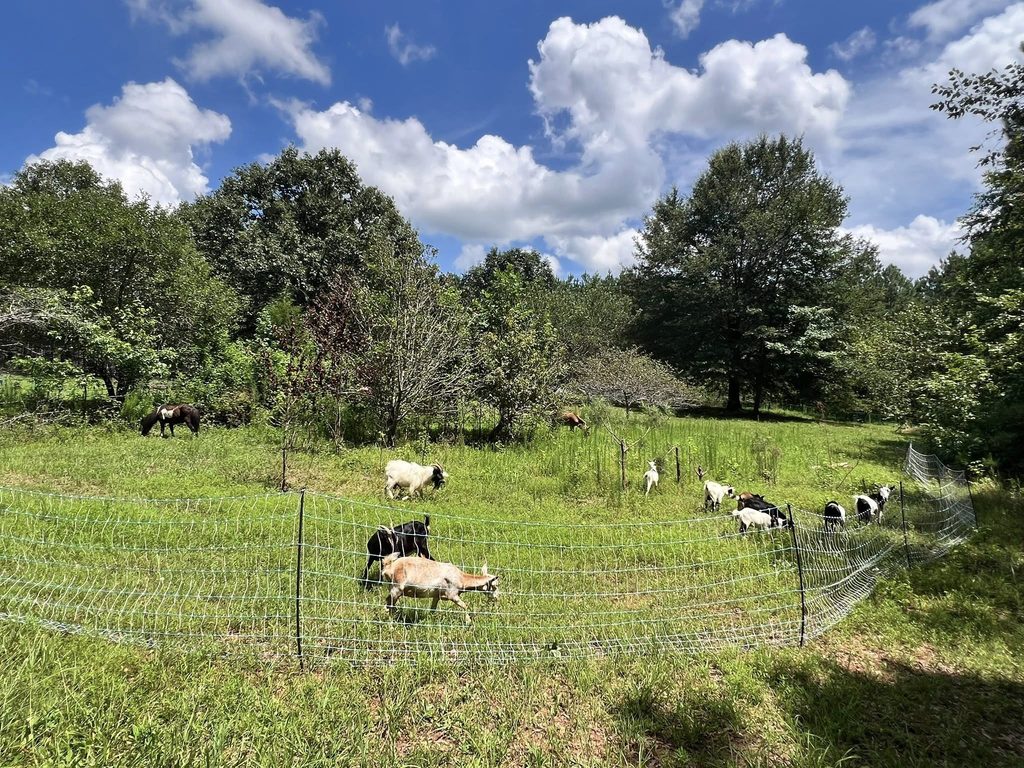
Browsing from area to area doesn’t just provide a variety of plants, but they are also moving across different soil types. I know that on my 25 acres there is several areas where the soil changes, imagine goats grazing over larger acrerage! If one area has a low copper content in the soil, the goats can move to an area where the plants provide more copper because they are growing in copper rich soil or have deeper root structures. In a domestic setting, goats eat plants growing in the same soil year after year. Whatever the soil is lacking on your property is also what your goat is lacking.
Natural mineral licks and “eating dirt.” Wild hoofed animals are known for visiting natural “licks” which are typically exposed clay, rock, or salty soil. On my farm I have a various shades of red clay under the top soil. Anytime I’m drilling holes for new fence posts, my goats love to come “eat the clay” brought to the surface.
There are fewer “copper blockers” for wild and feral goats. On most farms copper actually isn’t missing, it’s being blocked by other minerals. Too much sulfur, molybdenum, or iron in hay, water, or feed stops the goat from absorbing copper. Well water and certain fertilized pastures are common causes. Wild goats usually aren’t drinking one iron-heavy well or eating hay from one field.
Domesticated goats often have higher nutrient demands. We breed our goats for milk production, meat production, and fiber production. Feral and wild goats do not have as high of copper demands as goats bred with a purpose.
Does copper deficiency happen in wild and feral goat populations? Yes. The difference is natural selection. The goats that do not thrive in that environment die and do not typically survive to reproduce, leaving only genetics that thrive in that environment. Our animals are valuable, and we have an emotional attachment to them. So, we supplement and treat deficiencies in failing goats that would not otherwise survive.
Common signs of copper deficiency
Copper deficiency shows up in two broad patterns. When a pregnant doe is short on copper, kids can be born with or later develop enzootic ataxia (swayback): permanent spinal myelin damage, incoordination, and progressive paralysis that copper after birth will not reverse (MacKay, 2024). Why do we not hear about these issues in kids? Because they don’t survive long or the symptoms are often mistaken for polio. Give the symptoms of a kid that is born to a copper deficient doe to any online community, and they are going to tell you it is polio and treatment options for that. Occasionally you might get someone that says tetanus. I have yet to see copper deficiency in the doe addressed. After the neonatal period, if the kid survives, deficiency looks more like a production and coat problem: poor hair quality, anemia, weight loss, fragile bones, and reduced fertility (MacKay, 2024; Pugh, 2023).
On a working farm, keepers usually catch the integument first:
- Faded or “sunburnt” coat color. Black goats rust. Red goats wash gold. Cream goats look washed-out white. This is achromotrichia — failed melanin because tyrosinase needs copper (Suttle, 2010).
- Wiry, dry, or slow-to-shed hair. Texture often changes before the color looks wrong to an untrained eye.
- Hair loss on the face, especially around the eyes and bridge of the nose.
- “Fish tail”: hair at the tail tip thins, splits, and stands in two directions like a fish fin. This is a field term for tail-tip alopecia, not a phrase you will find in most journal abstracts.
- Later: pale membranes, poor gain, diarrhea in some cases, infertility, and bone fragility (MacKay, 2024; Merck Veterinary Manual, 2025).
Those coat changes are not folklore-only. El-khaiat et al. (2012) induced secondary copper deficiency in Baladi goats with dietary molybdenum and sulfur for 24 weeks. Hair color and texture changed by week 9. Hair copper content dropped by week 12. Red cell counts, hemoglobin, ceruloplasmin, and body-weight gain were already down by week 6. Pale membranes showed at week 18; emaciation at week 24. In other words, the coat told the truth early, and the blood and scale caught up later.
Field language still needs a caution label. “Fish tail” is widely used by goat keepers and extension writers, one split tail on an otherwise slick goat is a weak case. Two or three signs together — faded color plus wiry hair plus tail-tip balding, especially across several animals — is a much stronger herd clue (Pugh, 2023).
When it is not copper
Treat the picture, not the nickname. Other problems strip hair or bleach a coat without a copper enzyme failing.
- Old trauma. Frostbite or another animal chewing the tail tip leaves scar tissue. Hair does not grow back. That tail will look like a fish tail for life. Meanwhile you are dumping money into copper supplements.
- Lice and mites. Chewing lice and chorioptic mites drive rubbing, broken hair, dandruff, and bald patches. Chorioptic lesions often start at the tail base, feet, and lower legs. Itch plus nits or crusts points to parasites, not a mineral issue.
- Sun bleach. Ultraviolet light fades black and dark hair on the topline. The hair still feels like hair. Copper-deficient hair feels dead and wiry. Do not assess a goat at the end of the summer and say their black coat looks brownish, chances are it is just sun bleached unless you can identify other causes.
- Protein or energy shortage. A thin goat on poor hay grows a dry, sparse coat. Color may dull without the classic rusty conversion of a black coat.
- Wet-weather skin disease. Dermatophilosis (rain rot) mats hair into paintbrush tufts. Ringworm makes round crusty patches.
- Normal late shed. Winter undercoat hanging into May can look ragged. It should not stay faded and split-tailed after the rest of the herd has slicked off. Don’t assess during that spring and fall coat change. Wait till their coat has finished shedding for the season.
If only one animal is marked and she is not itchy, not thin, and not faded everywhere else, start with a hand on the tail scar and a fecal and lice check before you rewrite the mineral program.
Parasites and copper: a two-way street
Copper-deficient goats handle worms poorly, worms can cause anemia, iron is not the answer. Let’s talk about why. Copper supports immune function and tissue integrity; deficiency has long been associated with greater susceptibility to internal parasites (Merck Veterinary Manual, 2025; Pugh, 2023). On the farm that looks like a goat you cannot “clean up,” and you feel like you are contantly treating for worms, FAMACHA scores that bounce back, and a coat that never quite recovers after deworming.
There is a second, more specific link. Copper oxide wire particles (COWP) — the same slow-release copper rods used as a supplement — have a documented effect against the barber pole worm, Haemonchus contortus. Burke et al. (2007) found that doses as low as 0.5 g reduced fecal egg counts in young goats, with larger doses helping mature goats. Soli et al. (2010) reported that 2 g of COWP cut egg counts and adult H. contortus burdens in both kids and lambs sharing the same pasture. Vatta et al. (2012) found the anthelmintic effect in grazing goats lasted at most about 28 days. COWP is a tool against barber pole worm, not a substitute for fecal-guided deworming, pasture management, or genetics.
How iron walks into the copper story
Iron is essential. It is also one of copper’s main antagonists. High iron in water or feed reduces intestinal copper uptake (Merck Veterinary Manual, 2025). Many homestead wells run orange for a reason. That iron does not just stain the sink, it actively competes with copper in the gut of a goat drinking it every day.
Clinically, copper-deficient goats often do not look iron-poor on paper. Sousa et al. (2017) described adult Toggenburg goats with severe copper deficiency, achromotrichia, alopecia, anemia, and weight loss. The most affected group averaged 1.3 µmol/L serum copper — and 42.3 µmol/L serum iron, roughly double the control flock. Iron was high. Copper was on the floor. The anemia was not from empty iron bins.
That pattern matches the biochemistry. Ceruloplasmin and hephaestin are copper-dependent ferroxidases. They convert stored ferrous iron (Fe²⁺) to ferric iron (Fe³⁺) so it can bind transferrin and leave the liver and macrophages for the bone marrow (Suttle, 2010; Merck Veterinary Manual, 2025). When those enzymes stall, iron is sequestered. The goat can be sitting on iron and still cannot build hemoglobin. What this actually means is copper is what lets your goat use the iron she already has.
Think of iron as bricks and hemoglobin as the house. Bricks sitting in a pile do not make a house. Two copper-powered “keys” — ceruloplasmin in the blood and hephaestin in the gut — flip stored iron into the form that can ride a taxi (transferrin) to the bone marrow, where new red cells get built.
When copper is low, those keys stop working. The iron does not leave the liver and the recycling crew. It just sits there. She can have plenty of iron in her body and still make weak, pale, undersized red cells — the same look as “not enough iron,” but the real problem is the lock, not the brick supply.
That is why an iron drench often does nothing. You dumped more bricks in the yard. Nobody opened the gate. In the 2012 goat study, as copper enzymes dropped, red cell counts dropped with them. Same door, different lock. Goats are not iron deficient, they have a copper deficiency that doesn’t allow their body to utilize the iron effectively.
Why giving iron will not fix that anemia
This is the trap. Pale membranes look like iron deficiency. In humans, we are told, and hear stories about people we know who are anemic. What did their doctor recommend? Iron, because their anemia is caused by low iron levels. So many people believe that iron fixes anemia. That only works if the cause of the anemia is actually an iron deficiency.
The feed-store reflex is an iron drench or injectable iron. It makes goat owners feel like they are ‘doing something” to fix the anemia. In a copper-deficient goat, that move often fails — and can make the mineral math worse. So grabbing an iron supplement is not the answer.
First, the bottleneck is mobilization, not inventory. Extra iron does not restart ceruloplasmin. You cannot push more iron through a locked gate. Those bricks keep building up, but are still just sitting in the pile not building anything.
Second, added iron is another antagonist. If well water or forage iron is already high, more iron tightens the clamp on copper absorption (Merck Veterinary Manual, 2025). You treat the FAMACHA score and starve the enzyme that was supposed to fix the anemia.
Third, if the paleness is actually caused by parasitic infections, iron still does not stop the leak. You replace what the worm is drinking while the worm keeps drinking. Packed cell volume (PVC) climbs after you kill the worms and after copper status is restored, not after you hide the pallor with a mineral the marrow cannot use. Literally ever single day I see at least one comment, typically many, in online goat groups telling someone to give iron to their anemic goat. I have yet to see anyone suggest giving a copper bolus so that the goat can use the iron that they are already consuming in high quantities.
None of this means goats never need iron, and no I am not saying never give an anemic goat iron. Kids with genuine iron-limited diets, animals with chronic blood loss after the source is controlled, or a documented low iron status are different cases. What it does mean is that “pale goat” is not an iron prescription. Goat owners are over supplementing with iron, and being told to do so by “experienced” goat owners. Check FAMACHA and a fecal. Look at the coat and the herd, not one FAMACHA score. Know what is in the water, have your soil tested. Copper status is best judged from liver copper when it matters; plasma or serum copper is a rough screen and can mislead because most circulating copper rides on ceruloplasmin (Pugh, 2023; Suttle, 2010).
Putting it together on a real farm
Start with the cheap clues that farmers have depended on for centuries. Is more than one goat faded, wiry, or fish-tailed? Is the well high in iron or sulfur? Are you feeding a sheep mineral? Is alfalfa or another high-molybdenum forage a big part of the ration? Are worms a constant fight? Those answers usually explain more than a single tail photo.
Offer a goat-specific loose mineral with copper year-round. If antagonists are high and clinical signs line up across the herd, discuss COWP or another copper plan with a veterinarian who understands goats — including the toxicity risk. Goats tolerate copper better than sheep, but they are not immune to overdose, especially from stacked boluses plus high-copper feed (Merck Veterinary Manual, 2025). Remember copper moves iron. Iron, in excess, blocks copper. If you only remember one sentence from this post, remember that one.
Thanks for stopping by!
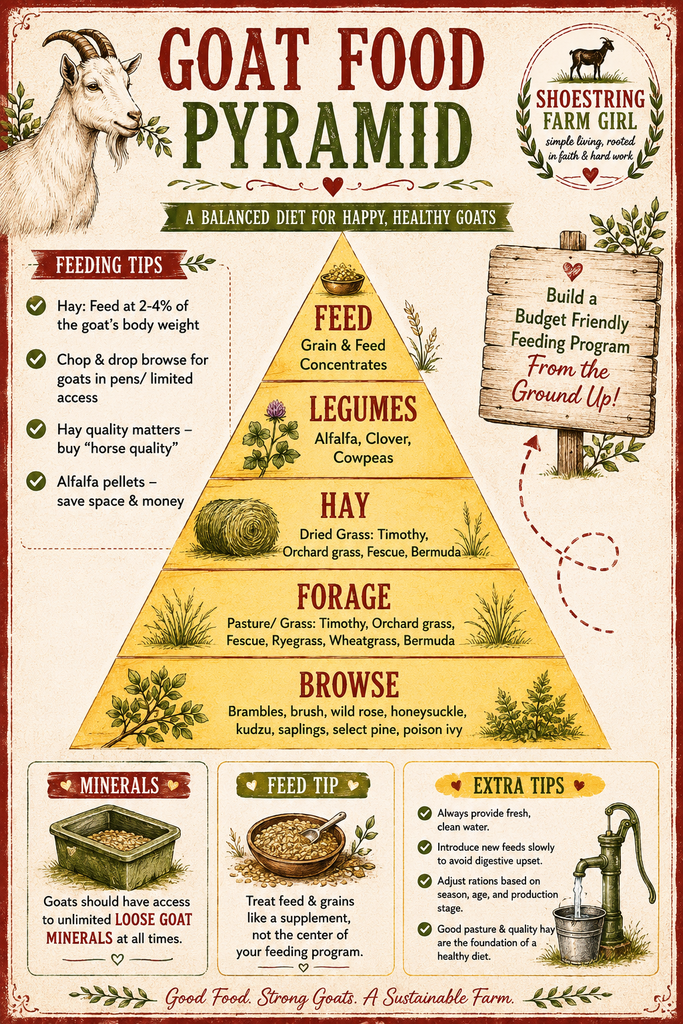
I hope you found this post informative. Don’t forget to sign up for our monthly newsletter and get a free PDF of the Goat Food Pyramid.
Carrie Lynn – Shoestring Farm Girl
References
Burke, J. M., Terrill, T. H., Kallu, R. R., Miller, J. E., & Mosjidis, J. (2007). Use of copper oxide wire particles to control gastrointestinal nematodes in goats. Journal of Animal Science, 85(10), 2753–2761. https://doi.org/10.2527/jas.2006-814
El-khaiat, H. M., Abd El-Raof, Y. M., Ghanem, M. M., El-Attar, H. M., Abou-Zeina, H. A., & Nasr, S. M. (2012). Clinical, haematobiochemical and hair changes of goats with experimentally-induced copper deficiency with trials of treatment. Benha Veterinary Medical Journal, 23(2), 137–147.
MacKay, E. (2024). Copper deficiency in goats. In Merck veterinary manual. Merck & Co. https://www.merckvetmanual.com/musculoskeletal-system/lameness-in-goats/copper-deficiency-in-goats
Merck Veterinary Manual. (2025). Nutritional diseases of goats. Merck & Co. https://www.merckvetmanual.com/management-and-nutrition/nutrition-goats/nutritional-diseases-of-goats
National Research Council. (2007). Nutrient requirements of small ruminants: Sheep, goats, cervids, and New World camelids. The National Academies Press.
Pugh, D. G. (2023). Trace minerals nutrition in goats. Veterinary Clinics of North America: Food Animal Practice, 39(3), 535–543. https://doi.org/10.1016/j.cvfa.2023.05.006
Soli, F., Terrill, T. H., Shaik, S. A., Getz, W. R., Miller, J. E., Vanguru, M., & Burke, J. M. (2010). Efficacy of copper oxide wire particles against gastrointestinal nematodes in sheep and goats. Veterinary Parasitology, 168(1–2), 93–96. https://doi.org/10.1016/j.vetpar.2009.10.004
Sousa, R. F. A., Almeida, V. M., Neto, J. E., Nascimento, C. W. A., Medeiros, G. X., Medeiros, R. M. T., Riet-Correa, F., & Mendonça, F. S. (2017). Laryngeal neuropathy in adult goats with copper deficiency. Veterinary Pathology, 54(4), 676–682. https://doi.org/10.1177/0300985816681410
Suttle, N. F. (2010). Mineral nutrition of livestock (4th ed.). CABI.
Vatta, A. F., Waller, P. J., Githiori, J. B., & Medley, G. F. (2012). Persistence of the efficacy of copper oxide wire particles against Haemonchus contortus in grazing South African goats. Veterinary Parasitology, 190(1–2), 159–166. https://doi.org/10.1016/j.vetpar.2012.06.018
Disclaimer
This article is for education. It is not a diagnosis or a treatment plan for your herd. Copper toxicity is real. Work with a veterinarian before bolusing, injecting, or changing mineral programs, especially if sheep share the property.
-
Goat Hay for Winter on a Budget: Best Types, Quality Secrets, Storage & Waste Tips That Actually Save Money
Cold weather is coming, and now is the time to buy hay for the winter.…
-
10 Minerals Your Goats Might Be Short On
10 Minerals Your Goats Are Short On and How to Supplement Without Breaking the Budget!…
-
Natural Goat Dewormers: 5 That Hold Up on a Fecal, and 5 That Don’t!
Most “natural” goat dewormers die in the rumen. Here is what fecal trails and science…
